Inoculating the Institution: Erica Gangsei on Play SFMOMA's 15-Year Experiment
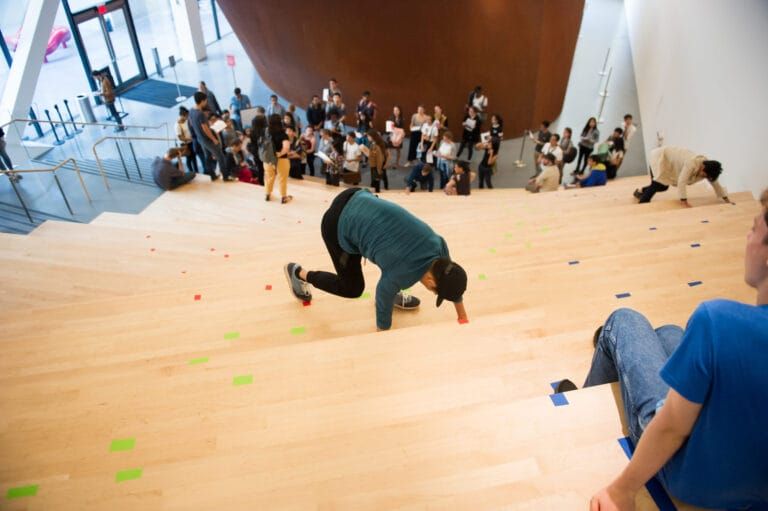
Erica Gangsei has run the interpretive media team at SFMOMA for nearly two decades, and for 15 of those years, she's quietly been building one of the most coherent game-based programming initiatives at any major cultural institution in the country.
In this conversation, we get into the origins of Play SFMOMA, launched in 2011, before games as an art form had any real institutional legitimacy, and what it actually took to sustain a program built on deliberate experimentation rather than proven outcomes. Erica talks about the decision to treat game designers the way SFMOMA treats sound artists and filmmakers: as essential creative collaborators, not afterthoughts. She makes a sharp distinction between gamification (which museums were chasing then, and still are) and authentic game-based programming and explains why that difference matters for visitors.
We also talk about the institutional immune system. Erica uses the phrase literally: museums have white blood cells that attack unfamiliar things, and Play SFMOMA has spent 15 years slowly inoculating SFMOMA to interactivity. That means running an AR game jam knowing none of the prototypes would go into production, because the goal was to socialize the idea internally, not ship a product.
Other topics: why interpretive departments may actually be a better entry point for games than curatorial, the case for analog and paper-based work in a screen-fatigued world, what it means when a founder-driven program finally becomes an entity unto itself, and the LARPocracy research project—an EU Horizon-funded study using Nordic LARP as a model for deliberative democracy.
This is essential listening if you're inside an institution trying to build something with games without a clear mandate from above. (A nice contrast from my conversation with Casey Balthes at Tribeca!)
No spam, no sharing to third party. Only you and me.