
How the V&A Built a Games Program From the Inside Out
Listen to the podcast version here.
Most cultural institutions recognize that games matter. Fewer know what to do about it. The Victoria and Albert Museum is one of the rare organizations that has moved from recognition to action—mounting a landmark exhibition, acquiring games for its permanent collection, and building ongoing public programming around experimental game design.
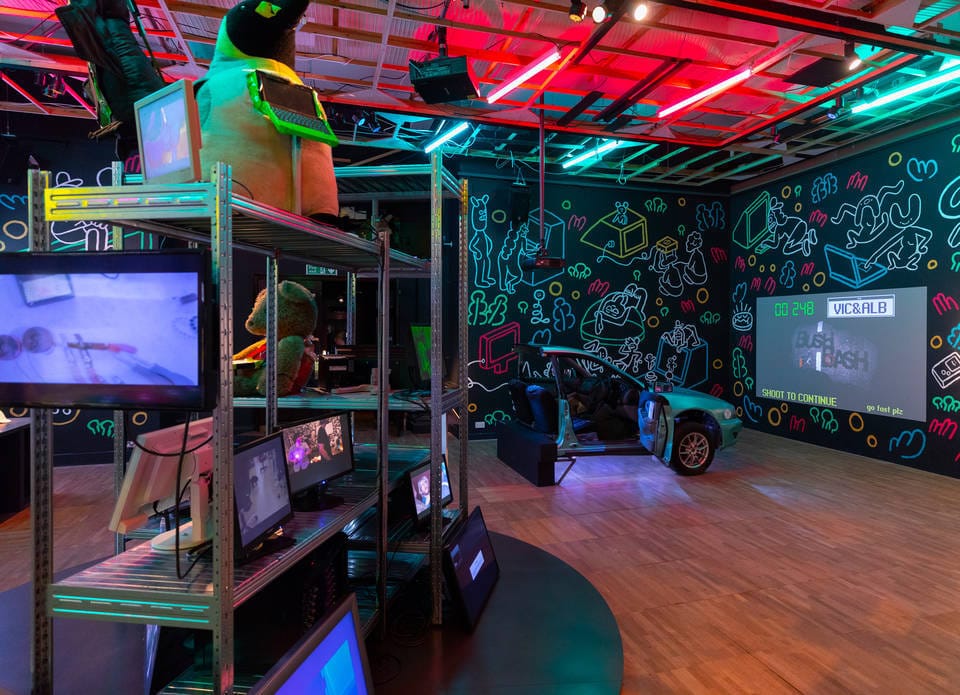
Kristian Volsing has been at the center of that work. As part of the V&A’s contemporary design team, he co-curated Design/Play/Disrupt, one of the most significant museum exhibitions dedicated to contemporary game design. He navigated NDA-protected studios, persuaded the National Gallery of Art to lend a Magritte for a video game show, and built relationships across the industry—from single-person indie studios to Nintendo’s headquarters in Kyoto.
In this conversation, Kristian shares practical lessons for any institution looking to engage with games: why live events can be a smarter starting point than collection-building, how to work with an industry that guards its intellectual property, and what experimental game designers actually need from cultural organizations. For museum professionals navigating this space—especially those who are champions without the authority to greenlight a major initiative on their own—this is a roadmap from someone who has built the path.
Jamin Warren: I’ve been following the V&A’s games work for years now, and more broadly what the UK has been doing with games and culture, which I think at a general level is pretty exciting. Tell me about your path to the V&A. How did you find your way to games as a curatorial focus?
Kristian Volsing: I did a degree in film studies and English literature and wasn’t really sure what to do with it. I was in Edinburgh, and I went to the National Museum where they had an exhibition called Game On, originally created by the Barbican. I was amazed that there was this space where people had created an opportunity to engage with games culture—putting it on a pedestal as a kind of art form, something we should be critiquing. That set off the idea that I wanted to work in museums.
I did an MA, got entry-level museum jobs, and started working at the V&A across different departments—furniture, textiles, theater, and performance. That gave me a grounding in how the V&A works and how you present ideas to the public through objects: how you bring an object to life for visitors, what context you need, and how to be pithy about what you say. Eventually, a new department was created focused on contemporary design, architecture, and the digital world. When I joined, there were already seeds of thinking about doing something with video games, and I was overjoyed.

Jamin: It sounds like in some ways games require this kind of cross-functional journey. You couldn’t have started there even if you wanted to, because there’s so much interdisciplinary work that games demand as a medium. But it also sounds like institutionally, it requires someone who can navigate different departments. It’s not as simple as saying, “We’re going to do a games show.” What were the changes happening at the V&A that opened the door?
Kristian: A new director, Martin Roth, arrived around 2011. He recognized that digital design had become so prevalent in people’s lives, but this institution—created 150 years ago to teach people about the importance of good design—wasn’t engaging with it. He restructured the departments and carved out space for a new one focused on contemporary and digital design.
What It Really Takes to Bring Games Into a Museum
Jamin: Let’s talk about Design/Play/Disrupt. One of the things that has irked me over the years is this kind of cattle-call approach—the “50 games on a wall” model, or independent arcades with 60 or 70 titles where people just shuttle through. You can’t actually finish anything. You can’t even get through if you put them all on screens in a room. You took an opposite approach: going deeper on a smaller body of work, focusing on the design documentation and the concepts behind the games. Walk me through that decision.

Kristian: We wanted to focus on what was happening right now. People had already done the history of video games and retro arcade gaming. We identified this as a fundamental moment: the technology meant people could experience worlds on a greater scale than ever imagined, and at the same time, tools were becoming accessible enough for independent creators to make deeply personal projects and share them through platforms like Itch.io.
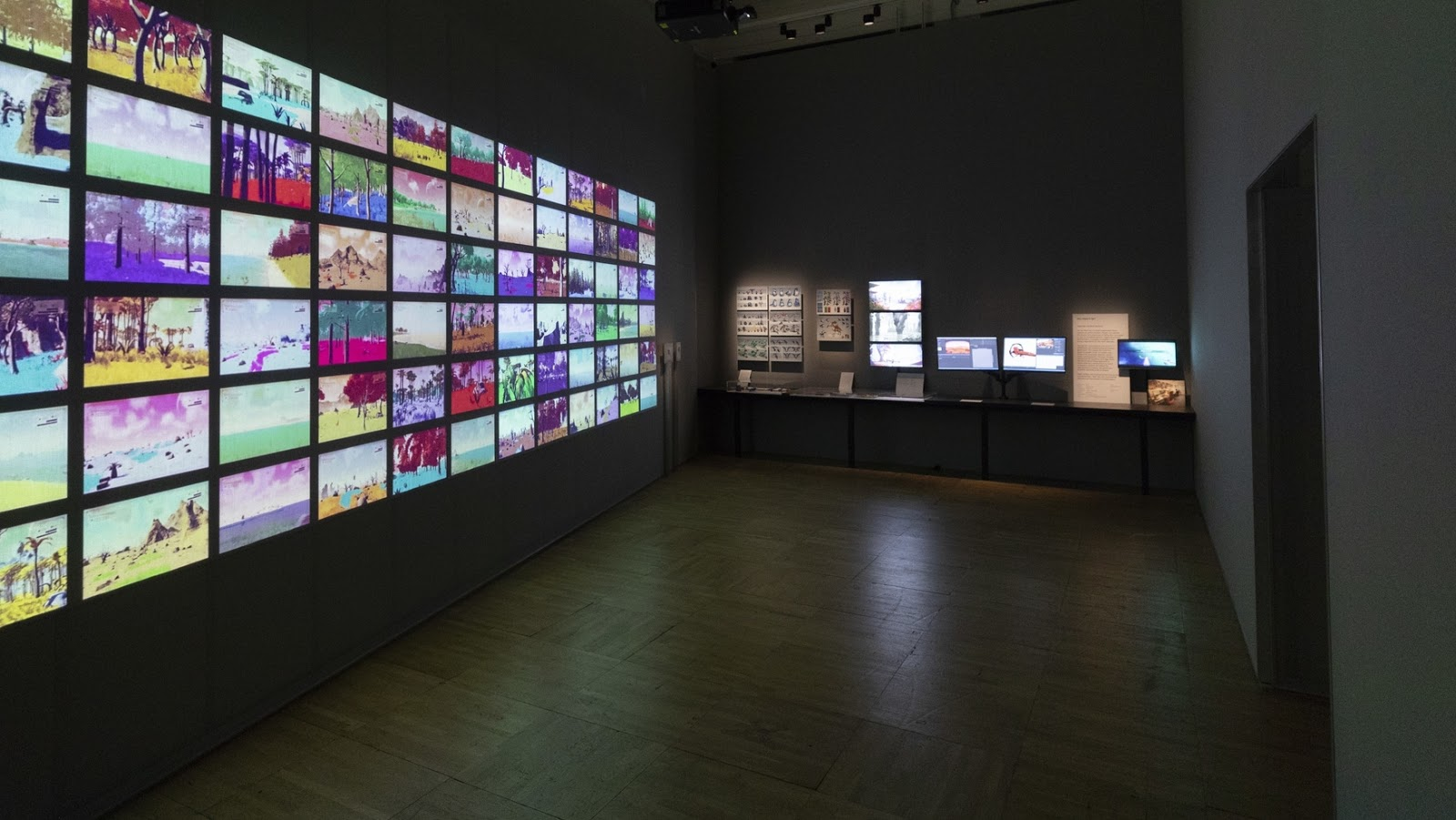
We went through a lot of iterations—we talked about exploring the technology behind consoles, all sorts of prosaic ideas. But what’s fundamentally fascinating is how many different elements these projects bring together in one artwork: coding, character design, art direction, music, the architecture of navigable spaces. All of these practices are represented in the V&A’s collection, but a game brings them together in one world. We wanted to break that down so people could understand why these were so important.
Navigating NDAs, Nintendo, and the Games Industry's Walls
Jamin: One of the things I hear from the institutions I work with is that getting in touch with game companies can be very difficult. The cultural currency that an institution like the V&A carries doesn’t always translate into a game industry context. It matters that people know who you are, that they understand the reference of the institution, and that they see value in participating. But my experience has been that your mileage varies enormously with game companies and game makers in terms of how much they value being part of something like this. How did you navigate that?
Kristian: Definitely with difficulty. The secrecy and NDAs in the games industry are something museums aren’t used to dealing with. Normally, we can visit a designer’s studio and see what they’re working on—that’s part of the curatorial process. There were studios where we couldn’t get past the front door.
The range of responses was striking. Ubisoft was really keen—they have a history professor on their development team for Assassin’s Creed, and they understood what we were doing. Naughty Dog gave us a full studio tour; we could identify individual artists by name. Nintendo was the opposite: Marie Foulston flew to Kyoto and was allowed into the reception and a meeting room. That’s all she saw. But through a lot of negotiation, they eventually agreed to participate, partly because we were focused on a younger design team working on Splatoon. Even then, all their material was credited to “Nintendo” rather than individual designers. FromSoftware shared illustrations in a notebook but asked us to cover half the pages. Independent designers were the most open, naturally, because they work across all the processes themselves.
Jamin: There’s an interesting tension there for curators. Institutions sometimes sit at cross purposes: on one hand, a well-known name pulls people through the door. But that’s not the sole requirement for putting on a show. There’s supposed to be a sense of discovery. And with games, the things people already know aren’t always the most important. You put the Nintendos on equal footing with a Kentucky Route Zero, which has a much smaller design team. Is that a tension you felt—balancing the known with the unknown?
Kristian: That was incredibly important. It was definitely about bringing that range. We spoke to Activision about Call of Duty as well—we tried to cover all bases. I think we got a reasonable mix.
Jamin: Robert Yang, the game designer, said the exhibition was a time when a big museum was taking advantage of its privilege—using institutional authority to bestow legitimacy on the medium. I think that’s part of the process for games being taken seriously. Creatively, they’re already there, but it’s different to have the V&A say, “We want you inside the institution.” It’s still very early days for games in museum contexts—really only the last 10 to 15 years. Was there intentionality in offering that institutional endorsement?
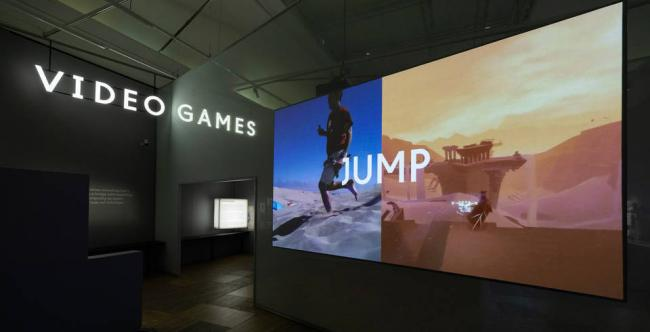
Kristian: For us, it was about bringing to a wider public the notion that games are not just frivolous. They reflect ideas in society. They’re played by billions of people every day, across everything from massive multiplayer worlds to deeply personal creative projects—poetry, almost. It’s a medium at the beginning of people discovering what they can do with it.
But from our institutional audiences’ perspective, this was a completely alien world. We were trying to convince visitors that it’s not a frivolous toy—that these are ways of exploring serious issues, presenting the world as you might want to see it. There’s a lot to bringing games into a historical institution and giving them a platform alongside the paintings, ceramics, fashion, and textiles the V&A is known for.
Jamin: As far as I know, there’s no dedicated games curator at the V&A right now. You wear multiple hats, and digital is a huge category under which games fall. When will we see a dedicated games curator—someone whose only focus is curating games? Is that a pipe dream, or does it happen at some point?
Kristian: Marie’s role as video games curator existed for the duration of the exhibition. When it finished, there wasn’t the impetus from above to keep it on the program, which was a great shame. I’ve tried to hang on in different ways.
I curated a permanent gallery on game design at the Young V&A for ages up to 14. Our digital design collecting team is still active, but their funded focus has been digital art. There’s an intersection with game-based artists like Danielle Brathwaite-Shirley, and I’m working on a commission with Lawrence Lek for V&A East.
Now I run the Contemporary Programme, and I’m implementing an annual experimental games event connected to the London Games Festival, working alongside independent curators who are really immersed in that space. The goal is to use the museum as a platform for audiences who don’t feel they connect with the collections but want to play games and think about game design. Hopefully, that becomes the foundation for something more permanent.
Where Should Your Institution Start? Live Events First
Jamin: There’s this real institutional bind. On one hand, it’s widely accepted that games are a love language for Gen Alpha, Gen Z, and many millennials. Research consistently shows that young people don’t see their interests reflected in museums. On the other hand, there’s controller anxiety—people who didn’t grow up with games can find them alienating. And then there’s the funding reality: games companies typically don’t spend money on the arts, which makes it hard for institutions to justify dedicating time, effort, and resources to a cultural form that doesn’t contribute financially the way other industries have. What advice would you give someone working inside a museum who doesn’t have the budget or authority to make something like this possible? What small things can they do?
Kristian: Live events are a really good starting point. You can facilitate them in gallery spaces much more easily on an event basis, rather than investing in the infrastructure needed to collect digital work. And look into who’s making games locally. Smaller institutions have done interesting things—Coventry’s museum collaborated with Rare, a nearby company, to showcase historical material from their archive. It doesn’t all have to be about blockbusters. It can be about the local context.
Jamin: That’s such a great point about not needing to look outside. At this point there are so many local game communities—informal groups of hobby designers, schools graduating more students in game design, independent collectives popping up in cities everywhere, from Distraction in Paris to Trust in Berlin. You don’t have to fly to Kyoto and sit in a conference room.
Last question: What do you wish more institutions qunderstood about what the games community actually needs from them?
Kristian: The experimental game community—the people trying new things, prototyping different ideas—they need space to present their work. They need somewhere with an audience that might want to try something they wouldn’t encounter at home. Many of these games are designed for public play. For me, that’s the fundamental role of an institution like ours: bringing audiences to lesser-known projects. I really want to introduce more people to work they don’t necessarily know about.
No spam, no sharing to third party. Only you and me.