The Bar Pays the Rent: Mark Kleback on Seven Years of Wonderville
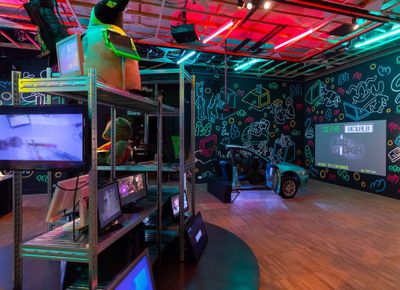
Mark Kleback runs a room in Bushwick with roughly thirty custom arcade cabinets in it, none of which take your money. Wonderville's bar pays the rent, so the games stay free, and nobody has to stand at the door taking tickets.
He got there the slow way. An electrical engineer who moved to New York in 2009, he ended up living in a Williamsburg warehouse called Death by Audio and built a cabinet out of scrap plywood for its venue. When the building closed in 2014, the cabinets went into a U-Haul and toured galleries and bars for five years as Death by Audio Arcade. Wonderville opened in June 2019, funded by Kickstarter and run with his wife, Stephanie Gross.
We talked about why the community has to exist before the space does, the two-minute limit a game clears before it reaches the floor, and why Wonderville is an LLC with a nonprofit attached rather than the reverse.
Jamin: Artists and institutions ask me how to open a game space. You spent about five years not opening one. What was happening in that time?
Mark: Death by Audio closed in 2014, so we were sort of a traveling circus of arcade cabinets. I would rent a U-Haul; we would pop up at different venues, the cabinets would be there for a couple of months, and then we would take them to the next place. So many venues, so many art galleries. And I think we were making a name for these games. Particle Mace had a song written about it, because it was at this venue, the Silent Barn, and people were starting to know where these games were and follow them. In 2018, we made it a point to do an event every month.
Jamin: And then the room itself?
Mark: We got incredibly lucky. For a year or two, I was looking at real estate, and somebody would show me a gigantic garage and say, yeah, there's no plumbing, so all you have to do is a million dollars of renovations. And it was a question of: where am I going to raise this money? Then our friends had a bar they were looking to sell. We hired their staff and slowly changed it from Secret Project Robot into Wonderville over about six months.
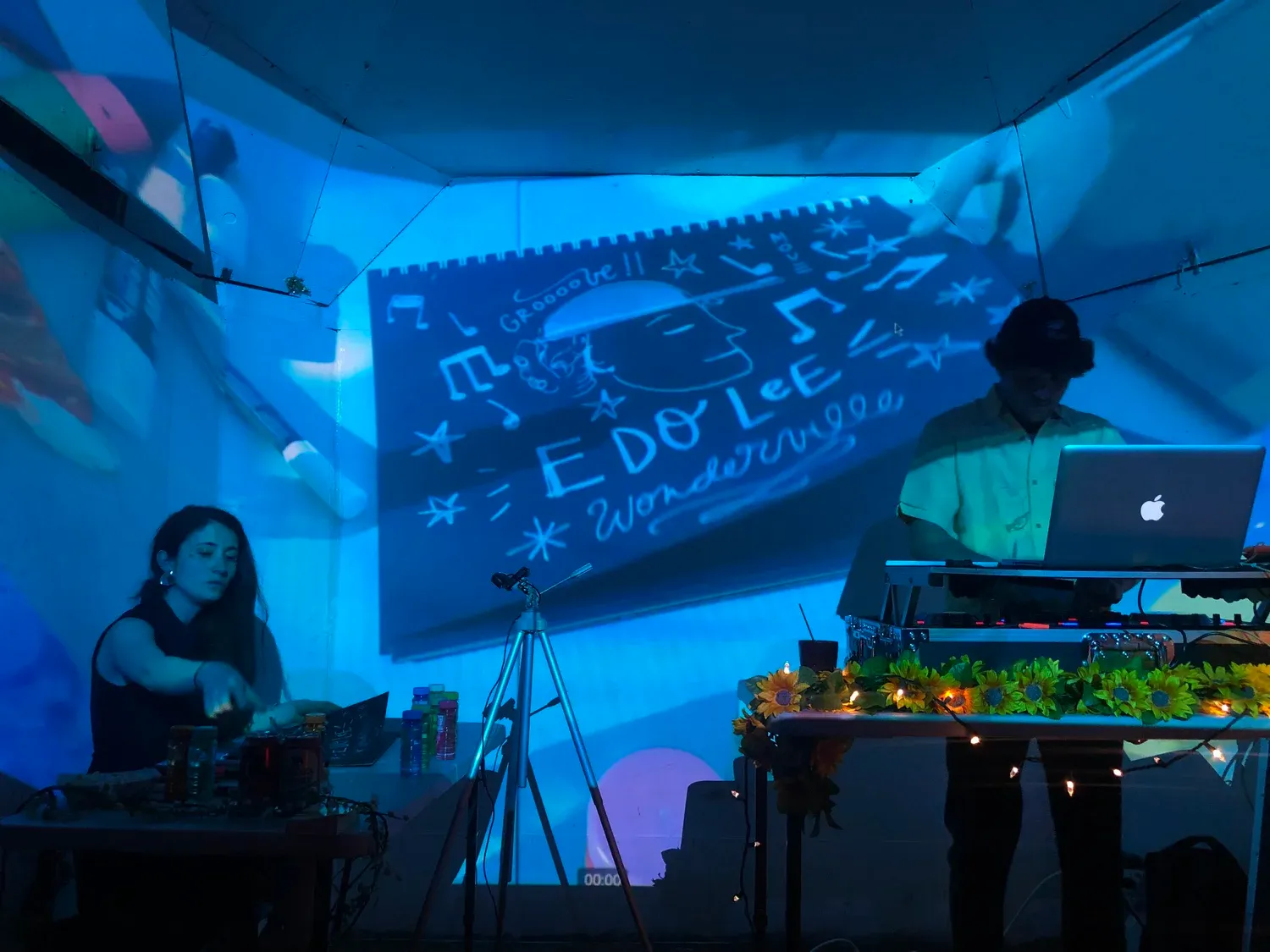
Jamin: Three businesses share that room: a bar, a venue, and an arcade. Does one of them have to win?
Mark: They're equally important, but the bar pays the rent. Most of our cabinets aren't pay-to-play, so the question was how the arcade would work. If we made it admission-based, we'd have to staff someone all the time to take tickets. So we're not going to do that. What if we keep the games free and make the money off the bar? Seven years in, the bar runs like any other bar: you order product, you sell product. Stephanie took over the booking and has staff under her. I'm in charge of making sure the games work, and that's a full-time job. Thirty custom cabinets and drunk people in the space every day. I joke that I'm the janitor. I go in and ask how many things are broken.
Jamin: What actually decides whether a game stays on the floor?
Mark: Maintenance is number one, because no matter how good the game is, if it breaks a lot, it's just not a good sight. We had a pinball machine that I loved. It was my passion project, and it was broken seventy percent of the time. You can't have something on the floor that doesn't work most of the time. So my biggest intention was to make everything as robust as possible. After that, it's balance: two-player, four-player, one-player, and not too many similar concepts. When we started, everybody was making a two-on-two ball in the goal game, and now there are four or five cabinets like that. If we bring one in, we swap it with a similar genre.
Jamin: Museums talk about dwell time, and they want it longer. You want it shorter.
Mark: Two minutes tops. That doesn't mean your game is only two minutes long. Hover Burger has a new map every week, so if you're good at it, you get a new experience every week. But in Wonderville, where attention is all over the place, you're not only competing with the stage; there are thirty other games. If you're there on a date night, people aren't going to play a twenty-minute experience. That's not to say that stuff isn't valuable. We've had one-night showcases for games that aren't a permanent fit. There's one called Qualia, a beautiful bar top cabinet where you answer questions with a survey. It's very insightful, very engaging. You just need a different environment to appreciate it.
Jamin: Last one, and it's the unglamorous question one. How is this structured?
Mark: Wonderville is an LLC; Stephanie and I, and all the staff, work for Wonderville. A couple of years ago, we started Wonderville Projects, a nonprofit that funds the playtest nights, the game jams, the alt.ctrl festival, and the residencies. The nonprofit doesn't have staff; we're just running it ourselves, but the plan down the road is to apply for more grants and hire people for the community-oriented things. Anyone looking to do this should look at AS220 in Providence, which operates as a nonprofit with city funding, but all the for-profit work sits under the nonprofit umbrella. I think that's a really interesting way to do it.
Links
- Wonderville
- Wonderville Projects, the nonprofit that funds the playtests, game jams and residencies
- Kleebtronics, Mark Kleback's studio
- AS220 in Providence, the umbrella model he recommends
- Patrick Moran on the Barbican's 25 years of game-based programming, the conversation about thinking regionally that this one picks up
This interview is edited for content, grammar, and style.
No spam, no sharing to third party. Only you and me.