Inside the 15-Year Experiment That Quietly Built a Game-Based Arts Program at SFMOMA
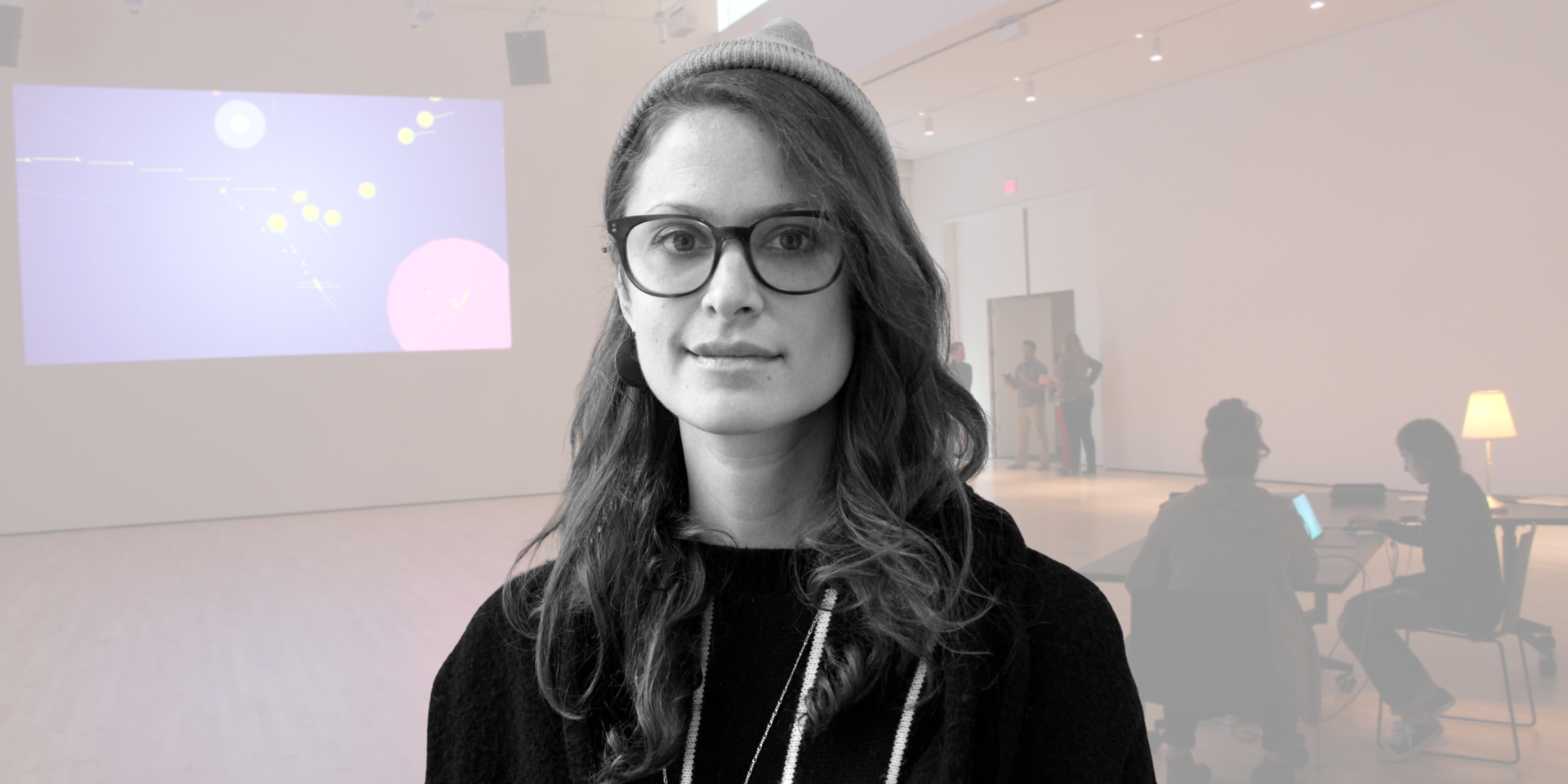
When Erica Gangsei launched Play SFMOMA in 2011, game-based creative practice had no institutional home in the American museum sector. Curatorial departments treated games as a form of entertainment. Education departments reached for gamification. The medium itself, with its forty-year history of formal innovation, was entirely outside the conversation.
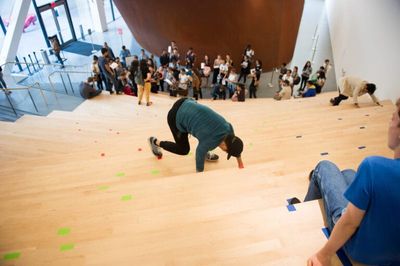
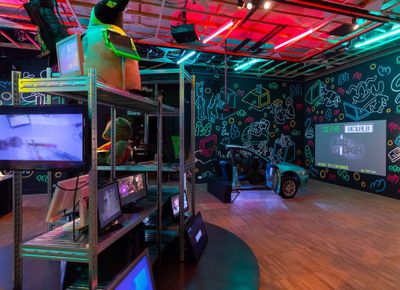
What followed is one of the most coherent multidisciplinary programs inside any major cultural institution in the country. Fifteen years of designer residencies, public playtests, game jams, pop-up arcades, and experimental programming, all built on a single argument: game-based arts deserve to be treated as a medium in their own right, engaged with the same seriousness museums reserve for sound, film, and architecture.
I sat down with Erica Gangsei, Director of Interpretive Content at SFMOMA, to talk about what it actually takes to sustain a program like this from the inside. The conversation moves through the structural questions every champion working without organizational authority eventually faces. How do you socialize an unfamiliar medium across a complex institution? When does an experimental program graduate into something durable? What does it mean for game designers to be treated as essential creative collaborators rather than service providers?
We also get into the case for analog and paper-based play in a moment of peak screen fatigue, the LARPocracy research project exploring Nordic LARP as a model for deliberative democracy (read on if you're confused!), and the quiet milestone Erica is approaching now: when a founder-driven experiment becomes an entity unto itself.
For multidisciplinary creators and cultural leaders building space for game-based arts inside institutions that don't fully understand the work yet, this conversation offers a working playbook from someone fifteen years deep into the practice.
Jamin: I'd love to start with your origin story. You came from a political family, and that seems to have shaped how you work.
Erika: I grew up in New York City with activist parents. My mom was president of the American Civil Liberties Union for both Obama presidencies and the first Trump presidency, then retired as soon as Biden was inaugurated. I grew up going to museums and the theater, went to an arts-focused school, and didn't figure out until I was a senior in high school that I'm pretty severely learning disabled. I was lucky enough to have access to alternative modes of education throughout my early childhood. I don't think I would have a bachelor's degree if it weren't for art school.
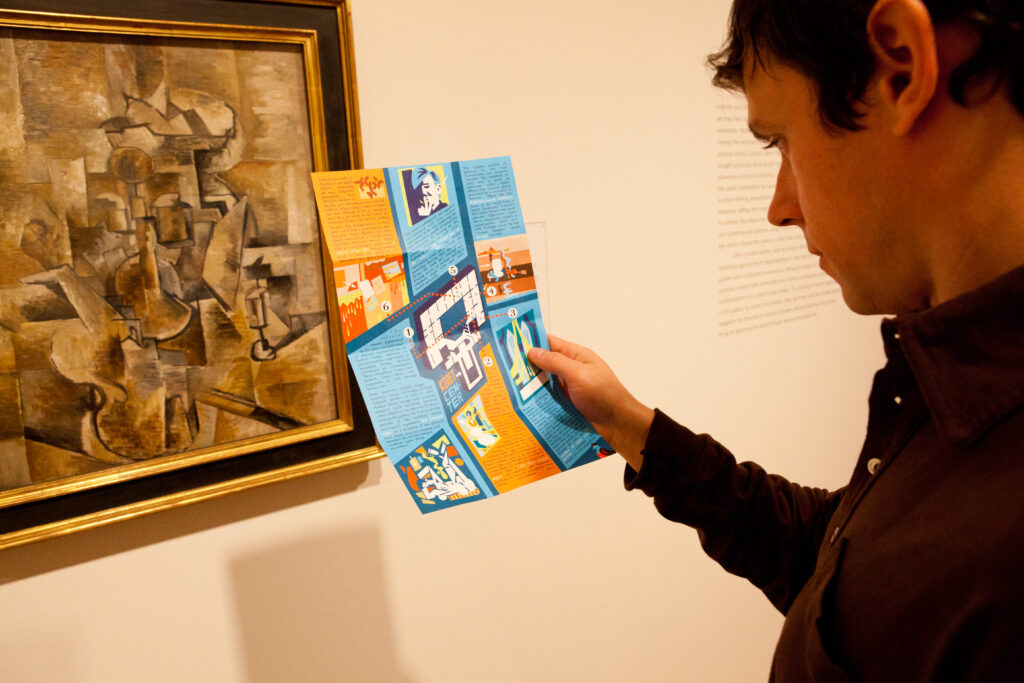
My path was unconventional. I worked in politics in New York City, then finished my degree at the San Francisco Art Institute. Within six months of graduating, I started temping at SFMOMA in fundraising, then moved to the interpretation team. I completely fell in love with it. As someone with a learning disability, I'd found theoretical spaces around art inaccessible because they lived in dense textbooks. Discovering podcasts, audio guides, and interactive websites was my way in.
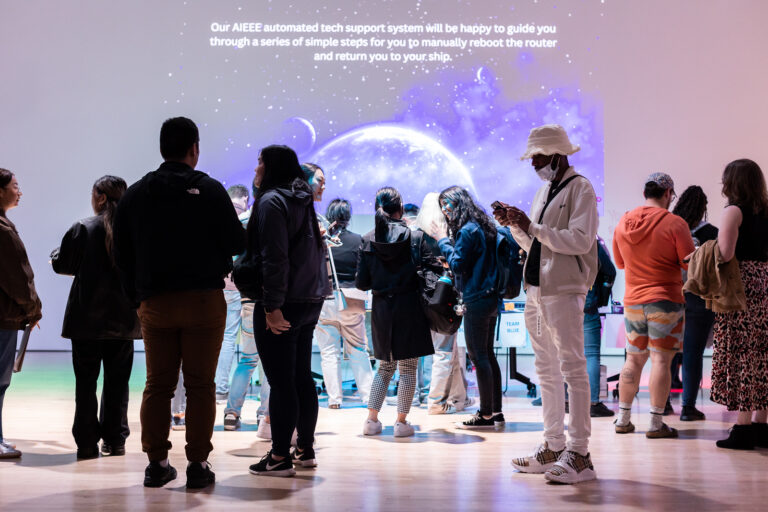
Jamin: Play SFMOMA launched in 2011, before games had any real institutional legitimacy. What were you arguing for?
Erika: Here's what I noticed. In interpretive content, you work with sound artists when making audio guides, and with award-winning filmmakers when making video. But when we were making interactive games for visitors, we weren't engaging people who make games. Games weren't being considered a medium in their own right. When museums discussed games at all, they meant gamification. Let's gamify our membership program.
So I started Play SFMOMA as R&D. Every year, one or two projects, always different from each other, are designed to engage deeply with game designers. A laboratory where visitors experience games unmediated, directly from the people making them. The first project was a crowdsourced games exhibition. Since then we've done pop-up arcades, designer residencies, game jams, public playtests, a teen program. The teens who did that program are in their twenties now and apparently still talk about it.
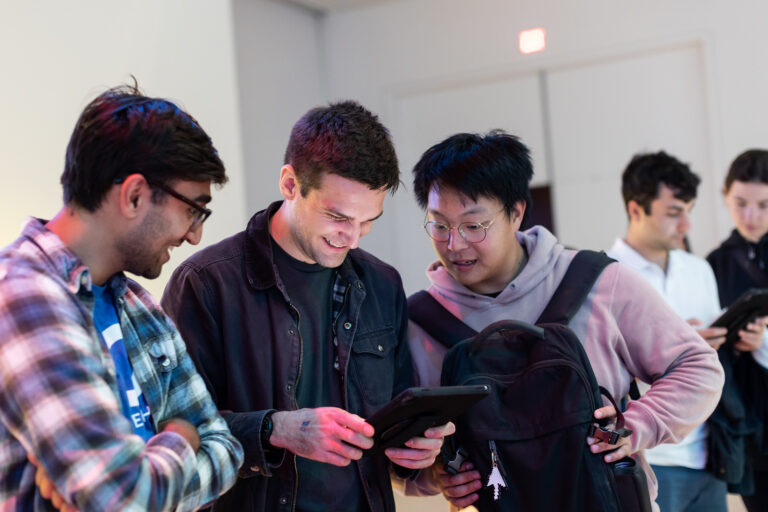
Jamin: Did interpretive content make it easier to introduce games than curatorial would have?
Erika: What's interesting is the continuum between games as art displayed in the gallery and games pressed into service to interpret other works. The middle space is where a play experience can be both the artwork and the mode of interpreting it. When people ask where games should live, I say games should live wherever they need to for the medium. We've collaborated with architecture and design, curatorial, and public engagement. Games need to be taken seriously as a medium and understood as a medium.
Jamin: Did your political background help you advocate inside the institution?
Erika: Yes. It's the comfort of being grassroots and the incredible stubbornness. If I believe something is the right thing to do, I'm not going to let it go.
When we started, every year, amazing creative people came to the neighborhood for the Game Developers Conference, and whether they'd find something appealing inside SFMOMA was a total toss-up. We had to establish relevance for those communities.
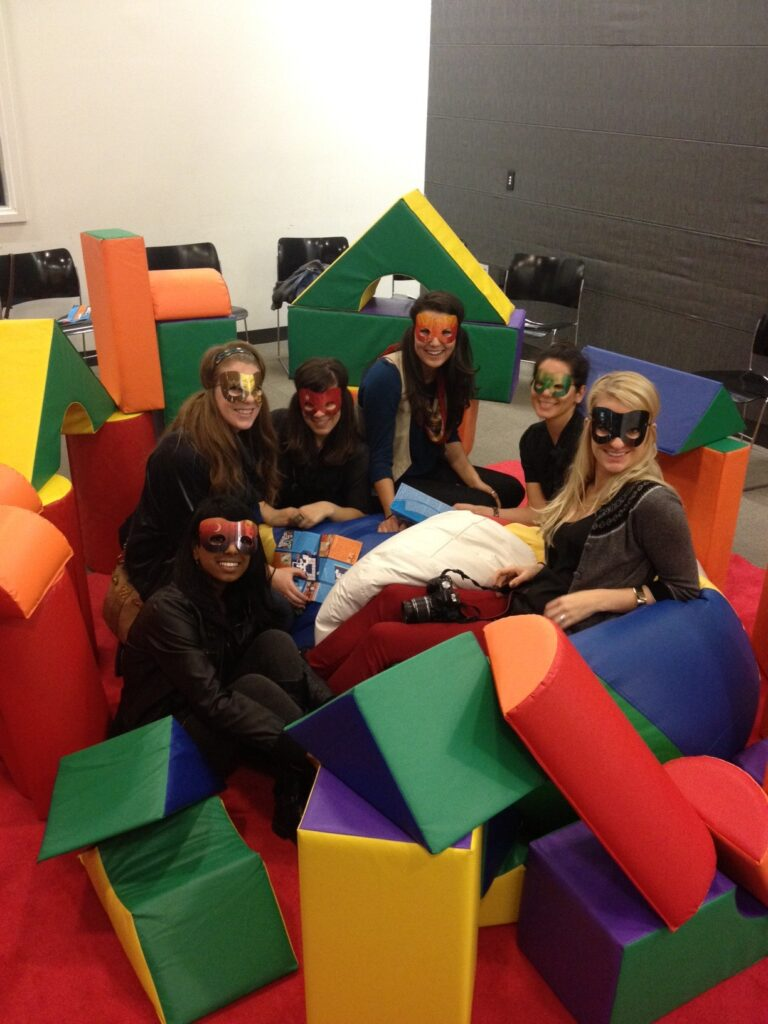
Jamin: You've leaned into analog work. Why, when the perception is that games should be shiny and digital?
Erika: I'm a huge paper-prototyping person. Once you have a paper prototype, you've actually developed your game. It's easy to design a game. It's hard to design a good one, and you don't know what you've got until you playtest.
I want to keep the conversation on the play experience, not on whatever new tech is shiny that year. In 2017, we did an AR pop-up with multiplayer VR and a live-action role-play (an immersive form of real-life gameplay) where the mechanic was dice and a binder. The real value of a play experience lies in the transformation a visitor undergoes once they step into the magic circle. That's not necessarily screen-based. And since COVID, visitors have hit peak screen fatigue. What they care about is the why of it.
Jamin: I find the anxiety that a lot of institutions have is that young people aren't coming to museums, and they're not building the muscle memory of supporting the arts.
Erika Gangsei: It's because they want interactivity. And I do think that there's a world where museums have understood how to provide that interactivity in a way that still feels authentic. What we've done in Play SFMOMA is actually develop an institutional tolerance for new forms of interactivity. None of the games we created during the game jam went into production. But it popularized the idea of augmented reality and allowed us to experiment with it and share it with our institution. All of the work that needs to be done to inoculate so that when games and interactivity are happening, the institution's white blood cells don't automatically attack. Oh, people are playing in the museum!
Jamin: You describe Play SFMOMA as a laboratory. Will it always be one?
Erika: We're having that conversation now. The question is whether the program can scale and whether collaborators from other parts of the museum can carry it. If experimentation can stay at the programmatic level and the infrastructure becomes less of a skunkworks, then maybe we've graduated out of the basement.
For a long time, if I left, the program would have stopped. Now I have hope that wouldn't be true. That may be the moment something stops being a founder-driven exercise and becomes an entity in itself. If it's one mad scientist in a lab, that's not a product yet.
This interview is edited for content, grammar, and style.
No spam, no sharing to third party. Only you and me.